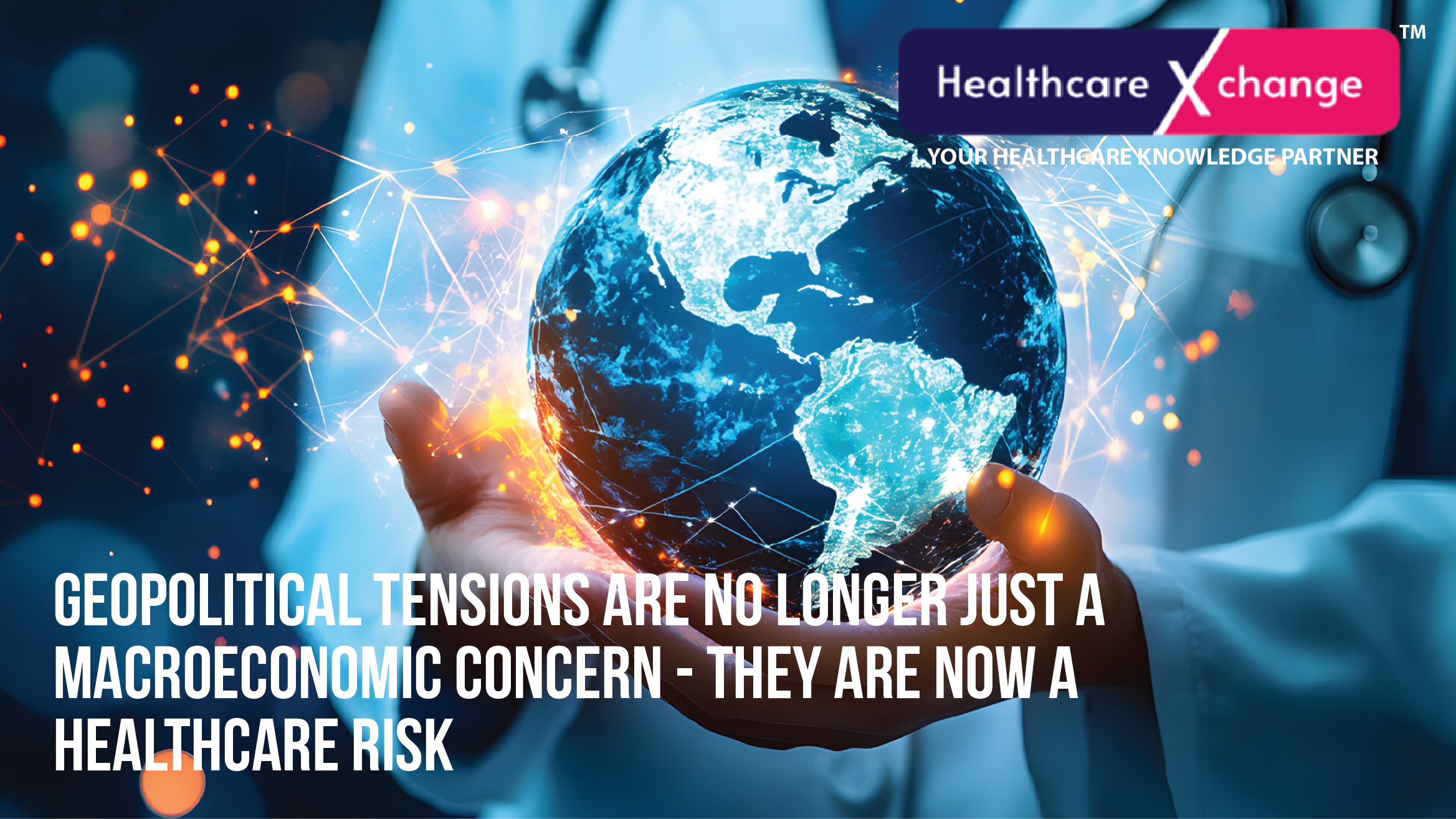
Geopolitical Tensions Are no Longer Just a Macroeconomic Concern – They are Now a Healthcare Risk
- Healthcare and General Service
- April 2, 2026
Highlights:
- Geopolitical risk is fast emerging as a core strategic and operational threat to the global healthcare ecosystem, reshaping how care is sourced, delivered and sustained.
- Global healthcare systems must evolve toward greater resilience by adopting more optimised, adaptive strategies to navigate an increasingly volatile landscape.
While clinical invention and frontline care remain largely driven by scientific and medical advances, geopolitical insecurity is precipitously reshaping the systems that enable healthcare delivery, particularly supply chain, drug access and procurement dynamics, introducing added functional complexity.
Recent developments have stressed how fragile healthcare systems can become when logistics corridors, transport routes and indigenous stability get disintegrated.
Many signals stand out:
- Pharmaceutical air cargo, that are critical for oncology and biologics, is under strain, with over 18% of global freight capacity liable to get disrupted.
- WHO exigency supply routes have been imperilled, with shipments rerouted via longer corridors, raising transport costs by up to ~30% and delaying aid delivery.
- Cholera response inventories to Africa have been delayed, with logistics backups driving air freight rates by up to 70%, exposing global supply chain shortfalls.
- Healthcare systems in conflict zones face mounting strain, with rising casualties and choked supply inrushes hindering timely access to care.
The ongoing developments aren’t just a public health concern; they’re turning into a strategic and functional threat for healthcare leaders, procurement brigades and life sciences companies.
According to Deloitte’s 2026 Life Sciences Outlook, 39% of life sciences directors now cite geopolitical pressures as one of the major strategic issues, over 20 percent points higher YoY, marking the sharpest rise across all threat orders.
At the same time, 38% identify supply chain pitfalls and profitable pressures as crucial factors shaping strategy, while 44% point to growing pricing and access challenges as central to decision-making.
It becomes clear that geopolitical insecurity is no longer something that can be overlooked; it’s reshaping how healthcare firms plan, source, invest and deliver care, forcing a shift from effectiveness-centred models to adaptability- led operating strategies.
What does this specifically mean for the healthcare sector
This is a moment of reckoning for healthcare organisations. They need to move beyond short- term contingency planning and decide more structurally about adaptability, specifically along the following lines:
- Diversify sourcing and logistics routes to reduce reliance on single topographies and ensure durability when supply routes get compromised.
- Strengthen indigenous and domestic supply networks to ensure redundancy and ameliorate final-stage adaptability.
- Enhance procurement visibility response dexterity through real- time data, enabling brisk, informed decision- making.
- Redesign access models for essential drugs and medical devices to guard against vacuity during times of insecurity.
- Embed geopolitical threat into core functional planning, treating it as a constant strategic variable rather than an external variable phenomenon.
In an increasingly unpredictable geopolitical climate, delayed drugs, strained hospitals, disintegrated diagnostics and interrupted exigency care are fast becoming systemic realities that can’t be overlooked.
Alertness and adaptability must be infused into systems proactively, allowing for the anticipation of vulnerabilities beforehand and enabling rapid-fire adaption in real time.